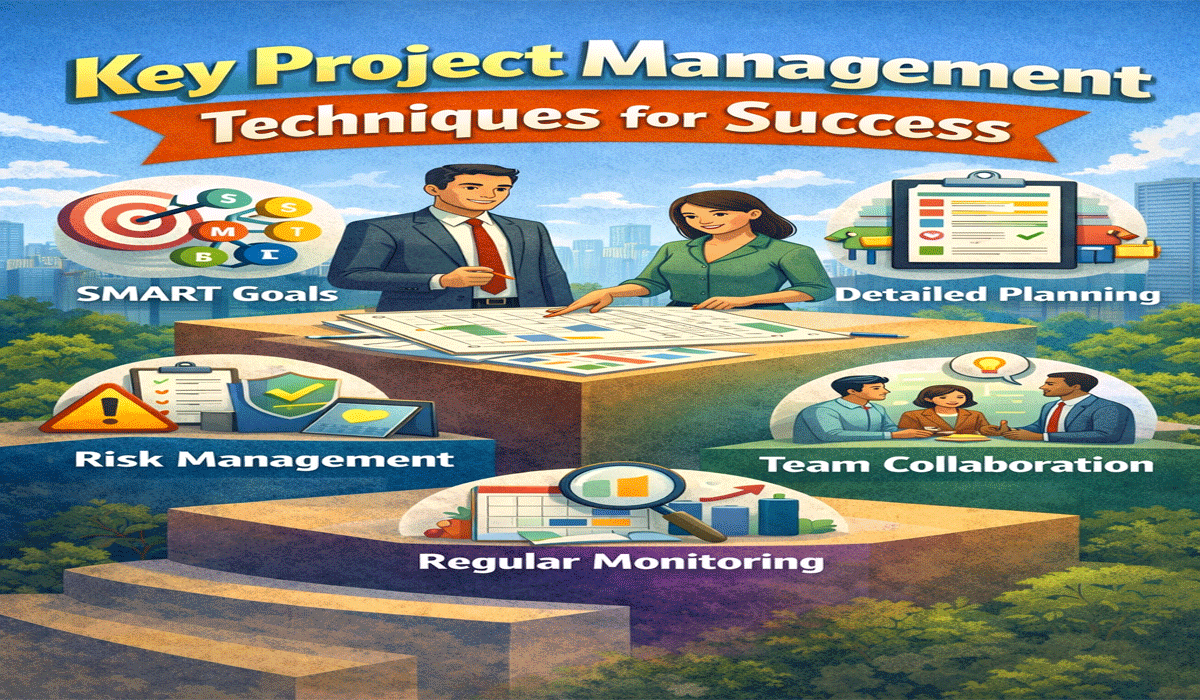
Practical strategies ensure the success of major projects through careful planning, strict quality control, and communication.

Large-scale and multinational project management is an increasingly crucial discipline in the era of globalization. Companies no longer operate within a single geographic region, but across national borders, with complex regulations, cultures, languages, and differing technological systems. In this context Streamlining Business Projects, project success is determined not only by technical capabilities, but also by strategic leadership, cross-cultural coordination, and structured and adaptive governance.
Characteristics of Large-Scale and Multinational Projects
Large-scale and multinational projects typically have extensive scopes, involve thousands of workers, and carry high budgets. A concrete example can be seen in global infrastructure development projects such as those managed by Bechtel Corporation or the cross-border energy program led by Siemens AG. These projects are not only large in terms of budget, but also in terms of social and economic impact.
In addition to technical complexity, multinational projects face different regulatory challenges in each country. Safety standards, tax regulations, and labor policies can vary significantly. Therefore, project managers must understand the international legal framework and maintain good relationships with local authorities to ensure smooth implementation.
Another characteristic is the team’s cultural diversity. Differences in communication styles, work ethics, and leadership styles can impact collaboration. Without an effective cross-cultural management strategy, the potential for conflict increases and can lead to project delays. Therefore, cultural sensitivity is a key competency in multinational projects.
Strategic Planning and Global Governance
Strategic planning is a key foundation in large-scale project management. Frameworks such as those published by the Project Management Institute through the PMBOK (Project Management Body of Knowledge) standard provide systematic guidance on planning scope, time, cost, quality, and risk management. This standard helps organizations maintain process consistency across countries.
In a multinational context, project governance must integrate a transparent and standardized reporting system. Global companies such as Toyota Motor Corporation are known for implementing integrated quality control and project management systems across all their branches. This consistency allows for effective cross-regional oversight without sacrificing local flexibility.
Also Read: Changing The Way Businesses Move Through Streaming Platforms
Resource and Technology Management

Human resource management in multinational projects requires an adaptive approach. Recruiting experts from various countries opens up opportunities for knowledge transfer, but also demands an effective coordination system. Technology companies like Microsoft Corporation leverage digital collaboration and global work systems to integrate teams spread across continents.
The use of digital technology is a key factor in managing large projects. Cloud-based collaboration platforms, Enterprise Resource Planning (ERP) systems, and project management software enable real-time performance monitoring. Digitization also supports data transparency, enabling rapid, evidence-based decision-making.
Leadership and Cross-Cultural Communication
Leadership in multinational projects requires adaptability and inclusiveness. Project leaders must be able to forge a shared vision across cultural and time zone differences. A transformational leadership style is often effective because it inspires cross-national teams to achieve common goals.
Communication is vital in maintaining coordination. Language barriers and differences in interpretation can lead to misunderstandings. Therefore, the use of an agreed-upon working language and cross-cultural communication training are crucial to minimizing conflict.
Risk Management and Global Project Sustainability
In large-scale and multinational projects, risk management is an integral aspect of the entire project management cycle. Risks can arise from various sources, such as political instability, regulatory changes, supply chain disruptions, and currency exchange rate fluctuations. Therefore, organizations need to implement a structured risk management system, including continuous risk identification, analysis, mitigation, and monitoring. Thank you for taking the time to explore this interesting information about Project Management in Streamlining Business Projects, We will provide much more information.
Image Information Source:
First Image: linkedin.com
Second Image: technology-signals.com