

In today’s rapidly changing business environment, project management has become a crucial factor in organizational success.

This year, many companies are shifting from traditional Waterfall methods to Hybrid approaches, combining Waterfall’s structured planning with Agile’s flexibility. This evolution reflects the modern business need for efficiency, adaptability, and quick response to market changes.
Below Streamlining Business Projects will discuss the complete evolution of Project Management Methodologies that occurred this year.
Understanding the Waterfall Approach
The Waterfall methodology, often considered the traditional backbone of project management, relies on a linear and sequential process. Projects are divided into distinct phases such as requirement gathering, design, development, testing, and deployment. Each phase must be completed before moving on to the next, creating a structured and predictable workflow.
Waterfall is particularly effective for projects with clearly defined requirements and minimal expected changes. For instance, construction projects or manufacturing processes often benefit from Waterfall’s step-by-step approach because deviations from the plan can be costly and complex.
However, the main limitation of Waterfall is its inflexibility. In fast-paced industries, where client requirements can evolve rapidly, Waterfall can struggle to accommodate changes. Once a project enters a later phase, making adjustments can be expensive, time-consuming, or even impossible. This rigidity has led organizations to explore more adaptive methodologies.
The Rise of Agile Methodology
Agile project management emerged as a response to the limitations of Waterfall. Unlike the sequential approach of Waterfall, Agile emphasizes iterative development, collaboration, and responsiveness to change. Teams work in short cycles called sprints, delivering small increments of the final product. This allows for regular feedback and continuous improvement.
Agile is widely adopted in software development, digital marketing, and technology-driven industries. Its core principles include prioritizing customer collaboration over contract negotiation, responding to change over following a fixed plan, and delivering working solutions frequently.
The benefits of Agile are clear: increased flexibility, faster delivery times, and enhanced stakeholder satisfaction. However, Agile is not without its challenges. Teams need strong communication skills, a culture of trust, and effective self-management. Agile can also become chaotic if not properly guided, especially in larger organizations where coordination across multiple teams is required.
Also Read: Leading Streaming Projects, Unlocking Team Success & Collaboration
Hybrid Project Management: Combining the Best of Both Worlds
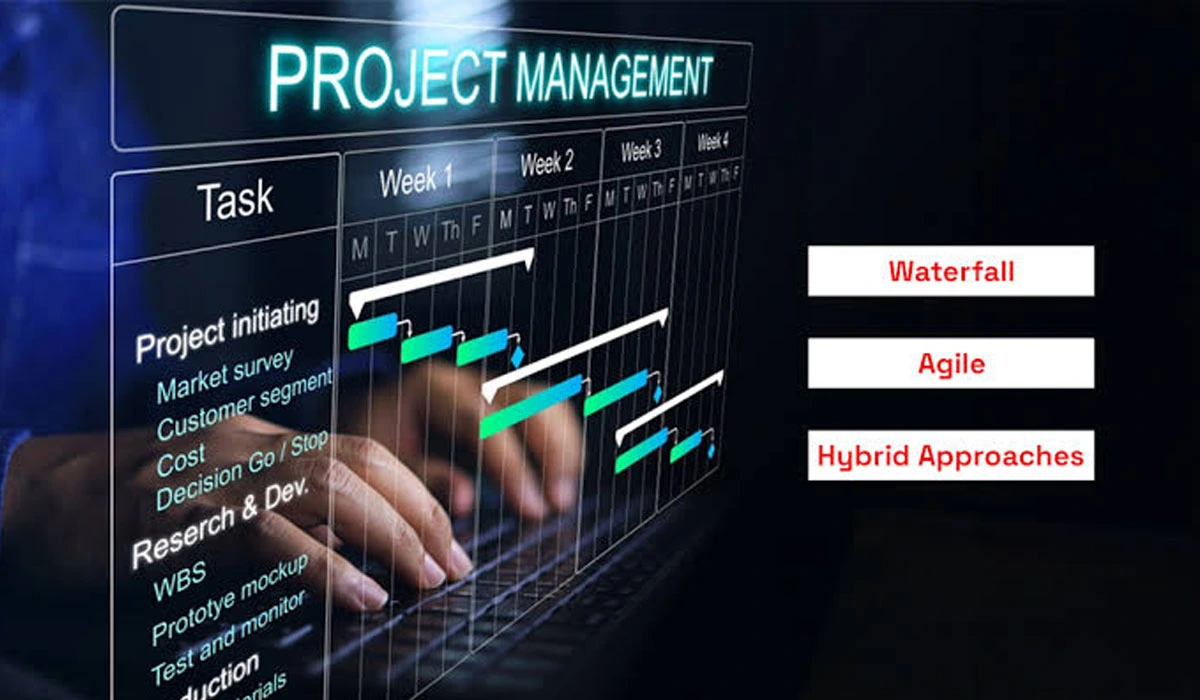
Recognizing that neither Waterfall nor Agile alone is perfect for every project, organizations have increasingly adopted Hybrid project management. Hybrid combines the structured planning of Waterfall with the adaptability and iterative nature of Agile, creating a more balanced approach.
In a typical Hybrid framework, strategic planning and critical milestones may follow a Waterfall structure, while development, testing, and iterative feedback loops leverage Agile principles. This approach provides the predictability needed for budget and timeline management while allowing teams to respond to changing requirements.
The advantages of Hybrid project management include improved flexibility without sacrificing control, better alignment between stakeholders and project teams, and enhanced risk management. Organizations can tailor their project methodology to the specific needs of each project, ensuring that both stability and adaptability are achieved.
Best Practices for Implementing Hybrid Project Management
Successfully transitioning to a Hybrid approach requires careful planning and execution. Here are some best practices to ensure effective implementation:
Define Clear Objectives: Establish what elements of Waterfall and Agile will be applied to different phases of the project. Clear objectives prevent confusion and ensure alignment among team members.
- Engage Stakeholders Early: Early and frequent communication with stakeholders is essential. Hybrid projects often require buy-in from multiple departments to balance structure and flexibility effectively.
- Invest in Training: Team members need to understand both Waterfall and Agile principles. Training ensures everyone knows when to apply each methodology and how to collaborate effectively.
- Use the Right Tools: Project management software that supports both Waterfall and Agile workflows can streamline hybrid project execution. Tools like Jira, Trello, or Microsoft Project are commonly used to manage complex hybrid projects.
- Monitor and Adjust: Hybrid project management thrives on adaptability. Regular retrospectives and progress reviews allow teams to identify what’s working and adjust the process as needed.
By following these practices, organizations can harness the benefits of both traditional and modern methodologies, ensuring projects are delivered on time, within budget, and with the desired level of quality.
Stay up to date with the latest information from Streamlining Business Projects and don’t miss out on getting relevant and useful insights for your business development.
Image Information Source:
- First Image from: linkedin.com
- Second Image from: redlearning.org


