Project management is a critical skill that can determine whether a project succeeds or faces challenges met on time.
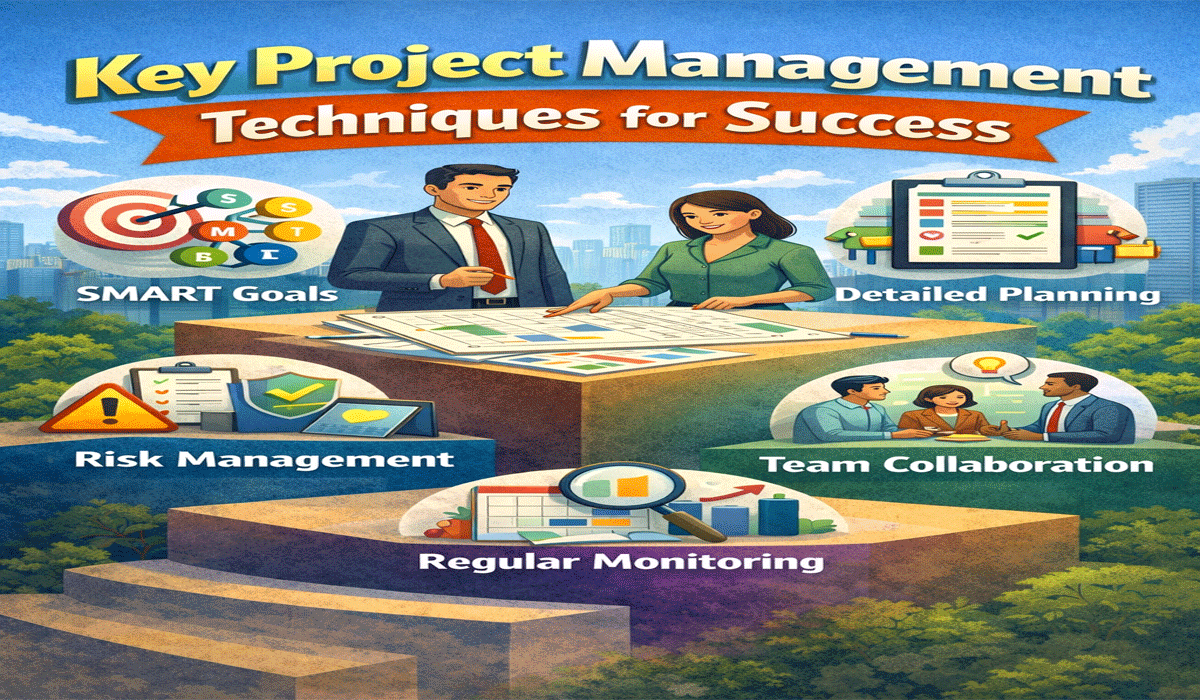
From planning and execution to monitoring and closing, applying effective techniques ensures that goals are met on time, within scope, and on budget successful project management requires more than just following a checklist. It demands strategic planning, proactive problem-solving, and continuous communication. By implementing structured techniques, project managers can minimize risks, improve efficiency, and increase overall productivity.
Below this Streamlining Business Projects will explores key project management techniques that enhance success, improve team collaboration, and optimize results across industries.
Clear Project Planning and Goal Setting
The foundation of any successful project lies in clear planning and goal definition. Establishing well-defined objectives helps the team understand the desired outcomes and provides a roadmap for execution.
Techniques such as the SMART framework ensuring goals are Specific, Measurable, Achievable, Relevant, and Time-bound help in setting realistic expectations. Additionally, breaking larger projects into manageable phases ensures progress can be tracked effectively.
Comprehensive planning also includes identifying resources, assigning roles, and outlining timelines. When team members understand their responsibilities and the project’s objectives, coordination becomes smoother and efficiency increases.
Effective Risk Management
Risk management is another critical technique that separates successful projects from those that struggle. By proactively identifying potential obstacles, project managers can develop mitigation strategies before issues arise.
Tools such as risk assessment matrices help prioritize risks based on their probability and impact. Regularly reviewing risks throughout the project ensures that adjustments can be made promptly to avoid delays or cost overruns.
Effective risk management not only protects the project but also builds confidence among stakeholders. When risks are acknowledged and addressed, the team can focus on achieving objectives without unnecessary disruptions.
Communication and Collaboration Strategies

Clear communication is vital for project success. Establishing regular updates, meetings, and reporting mechanisms ensures that all team members and stakeholders stay informed about progress, challenges, and changes.
Collaboration tools, such as project management software and shared documentation platforms, enhance transparency and accountability. Encouraging open feedback and active participation helps in resolving conflicts and improving overall team performance.
By fostering strong communication and collaboration, project managers ensure that every team member is aligned with the project vision, enabling smoother workflows and timely decision-making.
Time Management and Prioritization
Managing time effectively is crucial in delivering projects on schedule. Techniques such as Gantt charts, Kanban boards, or the Eisenhower matrix help project managers prioritize tasks, track deadlines, and allocate resources efficiently.
Breaking tasks into smaller, manageable chunks allows the team to focus on critical activities first while preventing bottlenecks. Regular monitoring of timelines ensures that potential delays are addressed before they escalate.
Time management is closely linked to productivity. When tasks are prioritized and deadlines are clearly defined, teams can work more efficiently, reducing stress and enhancing the likelihood of project success.
Monitoring, Evaluation, and Adaptation
Successful project management involves continuous monitoring and evaluation. Regular performance reviews and progress tracking provide insights into whether the project is on course to meet objectives.
Techniques such as Key Performance Indicators (KPIs), milestone tracking, and status reports help assess progress against goals. When discrepancies are identified, project managers can implement corrective actions quickly.
Adaptability is equally important. Projects often face unexpected challenges, and the ability to adjust plans, reallocate resources, or modify strategies ensures that objectives can still be achieved efficiently.
Stakeholder Engagement
Engaging stakeholders throughout the project lifecycle enhances both accountability and support. Understanding stakeholder expectations and maintaining open lines of communication prevents misunderstandings and aligns project outcomes with business goals.
Regular updates, feedback sessions, and transparent reporting foster trust and help ensure that any concerns are addressed promptly. Satisfied stakeholders are more likely to provide support, resources, and guidance, contributing to project success.
Conclusion
Implementing key project management techniques such as clear planning, risk management, effective communication, time management, continuous monitoring, and stakeholder engagement significantly improves the chances of success.
This article emphasizes that success in project management is not accidental. By applying structured techniques and maintaining consistency, project managers can lead teams efficiently, mitigate risks, and achieve goals with confidence. These practices are essential for delivering projects that are timely, high-quality, and aligned with organizational objectives.
Image Source:
First Image from: waterfallsolutions.co.uk
Second Image from: www.softwaresuggest.com